Neighborhood Guide
Marunouchi / Nihonbashi
We're pairing these two on purpose, because most people searching "Marunouchi apartment" are actually going to end up living in Nihonbashi — and understanding why is the most useful thing this guide can tell you before you start touring buildings.
The short version: Marunouchi is Tokyo's financial and corporate core — Tokyo Station, the Imperial Palace, and a wall of headquarters buildings — with almost no residential stock of its own. Nihonbashi, its neighbor one stop east, is where the actual apartments are: old merchant-district bones, genuine grocery and daily-life infrastructure, and a few hundred years more history than the glass towers let on. If your search starts with "Marunouchi," it usually ends in Nihonbashi.
Housing near the Marunouchi office district
Marunouchi is the district immediately west of Tokyo Station — the red-brick 1914 station building faces it directly, and behind that sits one of the highest concentrations of corporate headquarters anywhere in Japan. It's also, deliberately, almost entirely commercial. Search any listings platform for a rental in Marunouchi itself and the results thin out fast: the honest answer is that The Ascott Marunouchi Tokyo is in neighboring Otemachi, an easy walk from Tokyo Station. For the right client, that one address is genuinely excellent: if minimizing commute time is the entire brief — a ninety-second walk to the desk, no train, no weather — nothing else in central Tokyo beats it. Everything else calling itself "Marunouchi living" is, on closer inspection, in Nihonbashi, Yaesu, or Otemachi and borrowing the more recognizable name.
The limitation isn't quality, it's choice. Marunouchi was built and has been continuously redeveloped as Tokyo's financial and administrative core, and the ward planning reflects that on purpose — one strong option rather than a real market of them. A client asking us for "a Marunouchi apartment" is really asking a commute question — how close can I get to this office district — and if The Ascott itself doesn't fit (wrong size, wrong budget, wrong dates), the honest next answer is Nihonbashi, Otemachi's residential edges, or Yaesu, all a short walk from the same desk.
What weekends actually feel like
The clearest way to understand Marunouchi is to walk through it on a Sunday. The lunch crowds, the coffee queues, the sense of a fully occupied city — all of that is a weekday phenomenon, driven by the office population. On weekends, large parts of the district empty out close to fully; some restaurants and cafés that thrive on the lunchtime salaryman crowd simply close. It's not unpleasant — if anything it's eerily calm and walkable — but it's worth knowing before you commit to a lease nearby expecting weekend street life. Nihonbashi, one stop over, keeps considerably more of its own rhythm on weekends, because it has actual residents and legacy retail that isn't solely dependent on the 9-to-6 office population.
The Imperial Palace run
The one unambiguous resident's amenity Marunouchi does offer is the Kokyo Gaien loop — the roughly 5km path around the outer grounds of the Imperial Palace, level enough for a first-timer and with about 30 meters of elevation change across the loop to make it interesting for someone training seriously. It has no traffic signals, runs counterclockwise by informal convention, and stays populated with runners well into the evening, which makes it one of the few genuinely reliable "safe to run alone after dark" routes in central Tokyo. Several running stations near the Hanzomon and Otemachi sides rent lockers and showers, useful if you're running before or after work rather than building a special trip around it. For a client whose daily routine already includes a serious training habit, proximity to this loop is a real and specific reason to prioritize Otemachi or Nihonbashi over a otherwise-equivalent building further out.
Nihonbashi: where the actual housing is
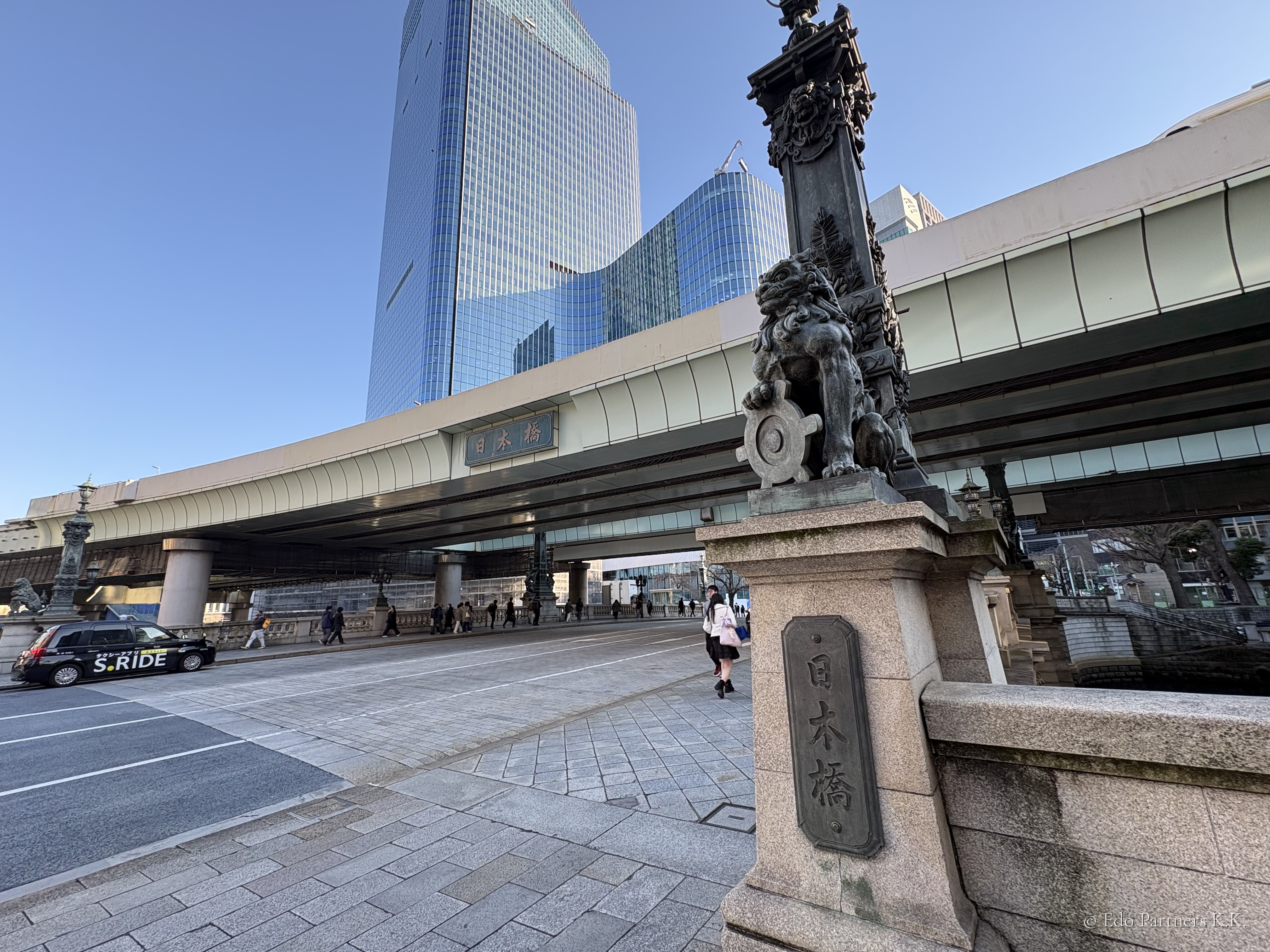
Nihonbashi is where this pairing turns from a caution into a recommendation. Unlike Marunouchi, it has genuine residential stock, because it was a merchant and trading district long before Marunouchi existed as a business core, and that older urban fabric left room for actual apartment buildings rather than pure office towers. The area takes its name from Nihonbashi Bridge itself: the original 1603 wooden bridge, commissioned under the Tokugawa shogunate, marked the starting point of the Tokaido and Japan's other major roads, making this intersection the literal center of the country's road network for over two centuries. The current stone double-arch bridge dates to 1911 and is a nationally designated Important Cultural Property — worth knowing since it's easy to walk past it as "just a bridge under an expressway" rather than recognizing it as the zero-kilometer marker for the entire country.
The retail and food landscape reflects the same layered history. Nihonbashi Mitsukoshi's main store traces back to 1673, when the Mitsui family opened Echigoya, a kimono shop whose fixed-price, cash-sale model was radical enough at the time to help define what a modern department store would later become; the building itself functions as a genuine architectural destination as much as a place to shop, and the basement depachika food hall is a legitimate answer to "where do I buy dinner tonight" if you live nearby. A short walk away, COREDO Muromachi (three connected buildings plus a terrace) mixes centuries-old shops with contemporary tenants under one roof, deliberately recreating some of the Edo-period bustle the area was known for.
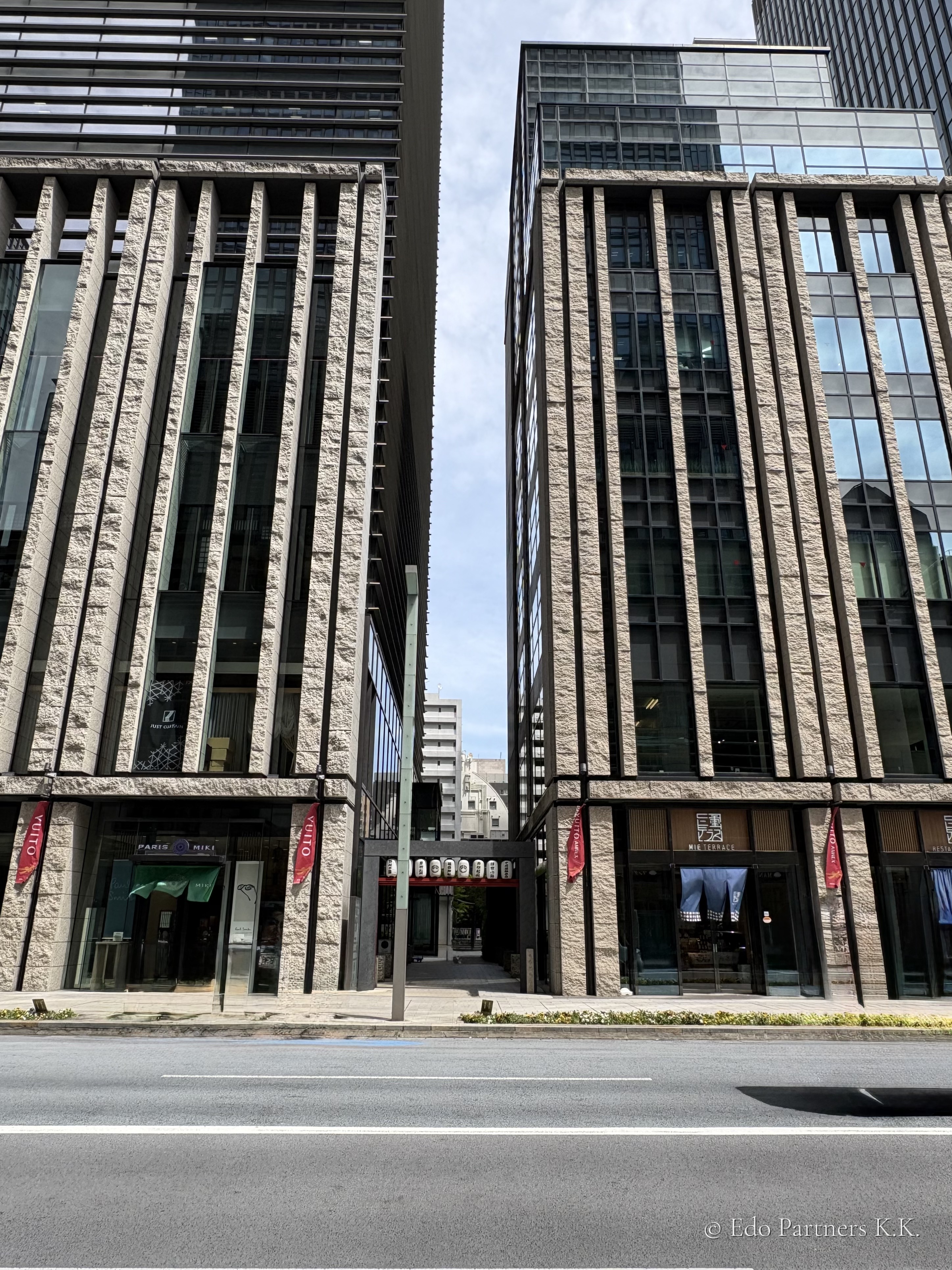
Immediately behind the YUITO complex — twin stone-clad towers connected by a narrow passage lined with lanterns — sits one of Nihonbashi's genuine surprises: Fukutoku Shrine, also known as Mebuki Inari. Its roots go back to the Jōgan era, roughly 859–877, and Tokugawa Ieyasu himself is recorded as having worshipped here. By the 20th century it had shrunk to little more than a rooftop shrine box, before Mitsui Fudosan's redevelopment of the district rebuilt it properly in 2014, alongside "Fukutoku no Mori," a small pocket of greenery with seating next to it. It's popular with the local office crowd for prayers around career advancement and new beginnings, which tells you something about who actually populates these streets on a weekday lunch break.
Depachika food halls are a fine answer to "what's for dinner tonight," but they're not where a household does its weekly shop, so it's worth naming what actually covers that. Seijo Ishii — the higher-end supermarket chain — has multiple branches here, including one built into Nihonbashi Takashimaya S.C.'s basement and a standalone shop a short walk from Nihombashi Station; Maibasuketto (an Aeon-owned convenience-format supermarket chain) has several branches scattered through Nihonbashi Muromachi and Nihonbashi Honcho for the everyday basics Seijo Ishii doesn't stock cheaply; and Meidiya, the import-leaning grocer, runs a branch in the Takashimaya basement as well. None of this is exotic by Tokyo standards, but it's a real, walkable grocery infrastructure — which is precisely the point of difference from Marunouchi, where this kind of everyday shopping barely exists.
 © Edo Partners
On the more day-to-day question of where residents actually shop, Nihombashi Takashimaya S.C. functions similarly to Mitsukoshi — a legacy department store with a genuinely useful basement food floor — and sits closer to Tokyo Station's Nihonbashi side, making it a realistic regular stop rather than an occasional destination. For culture rather than commerce, the Mitsui Memorial Museum, on the 7th floor of the Mitsui Main Building, next to Nihonbashi Mitsui Tower, runs rotating exhibitions of traditional Japanese art and tea utensils in a compact, well-curated space — a good hour-long stop rather than a full afternoon commitment.
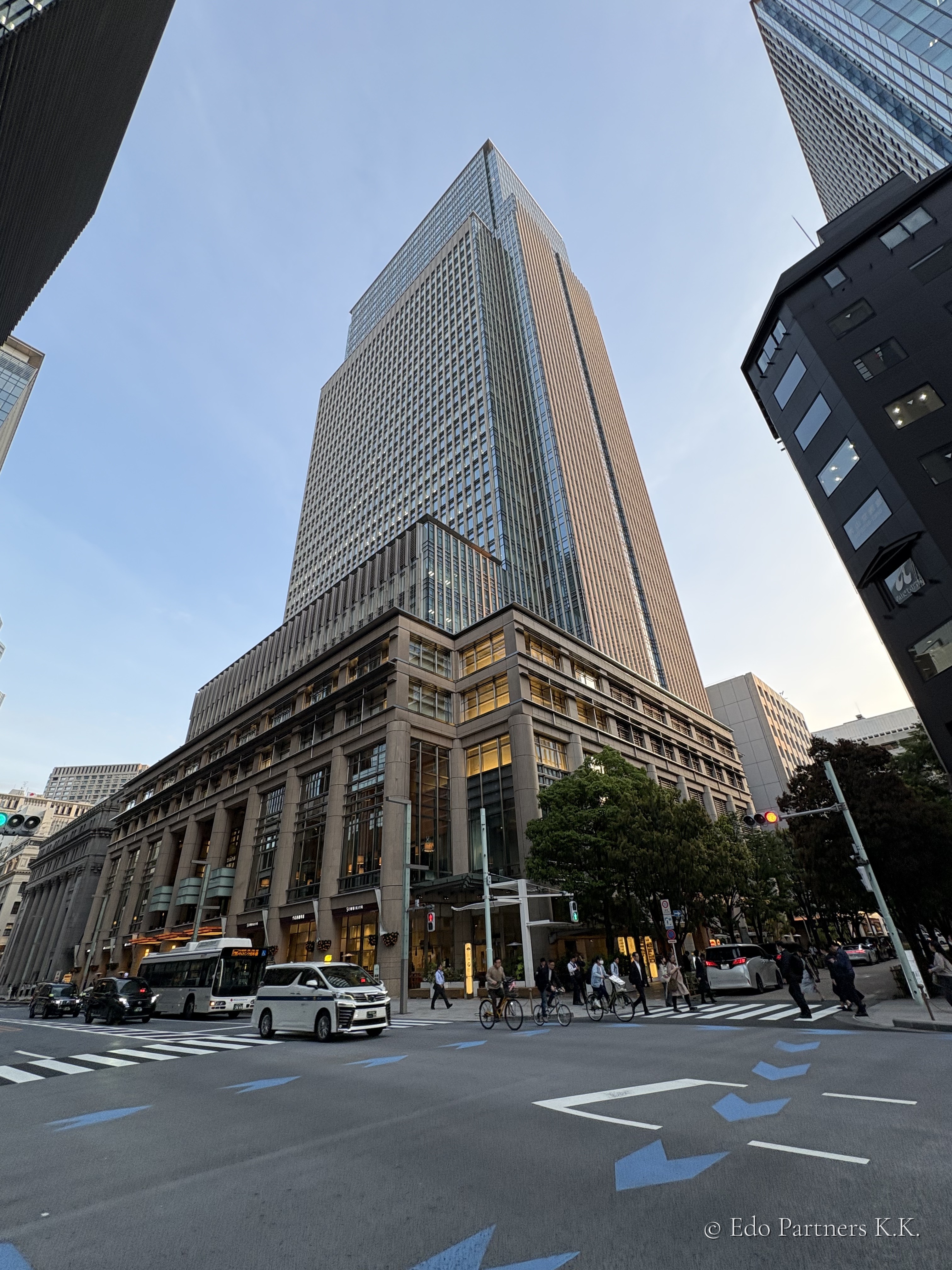
Next door, Mandarin Oriental, Tokyo occupies the top — is Mandarin Oriental, Tokyo, which opened in December 2005 as the group's first Japan property and occupies floors 30 through 36 of the Nihonbashi Mitsui Tower, right beside the nationally important cultural property that is the old Mitsui Main Building. All 179 rooms sit above the 30th floor, which means every guest room looks out over the city rather than into a neighboring building — locals sometimes call it "the hotel floating above Tokyo" for exactly that reason. For residents rather than guests, the relevant floor is 37: Mandarin Bar, with nightly live music and a night view that makes it a legitimate answer to "where do I take a visiting client for a serious drink" without leaving Nihonbashi at all — a useful data point for how this neighborhood is perceived at the top end, given that a five-star international hotel group chose to make its Japan debut here rather than in Ginza or Marunouchi.
 © Edo Partners
The sky is coming back to Nihonbashi
If you spend any time walking around Nihonbashi Bridge itself, you'll notice the elevated expressway running directly overhead — a fixture since 1964, built in the rush to get Tokyo ready for that year's Olympics, and for six decades it's meant that one of the country's most historically significant bridges sits permanently in the shadow of a highway. That's changing. Shuto Expressway's Nihonbashi undergrounding project — roughly 1.8km of elevated roadway between the Kanda-bashi and Edobashi junctions — is currently being rebuilt into a tunnel beneath the Nihonbashi River, with the underground route targeted for completion around 2035 and the old elevated structure fully removed by 2040. The project's own tagline translates roughly to "blue sky over Nihonbashi," and it's being coordinated deliberately with the neighborhood's ongoing redevelopment rather than treated as a separate infrastructure project.
 © Edo Partners
For a client asking us "why does this area feel like a permanent construction site," this is the honest answer — you'll see hoarding, scaffolding, and traffic changes around the bridge and river for years to come, and it's a genuinely long project even by Tokyo redevelopment standards. But it's worth understanding as a sign of where the neighborhood is heading rather than a reason to avoid it now: the area immediately around the bridge is being deliberately reshaped to remove a 60-year-old highway and restore river views that haven't existed in living memory for most residents. A client with a long time horizon in Tokyo is buying into that trajectory as much as into the current street level.
What's rising at Tokiwabashi
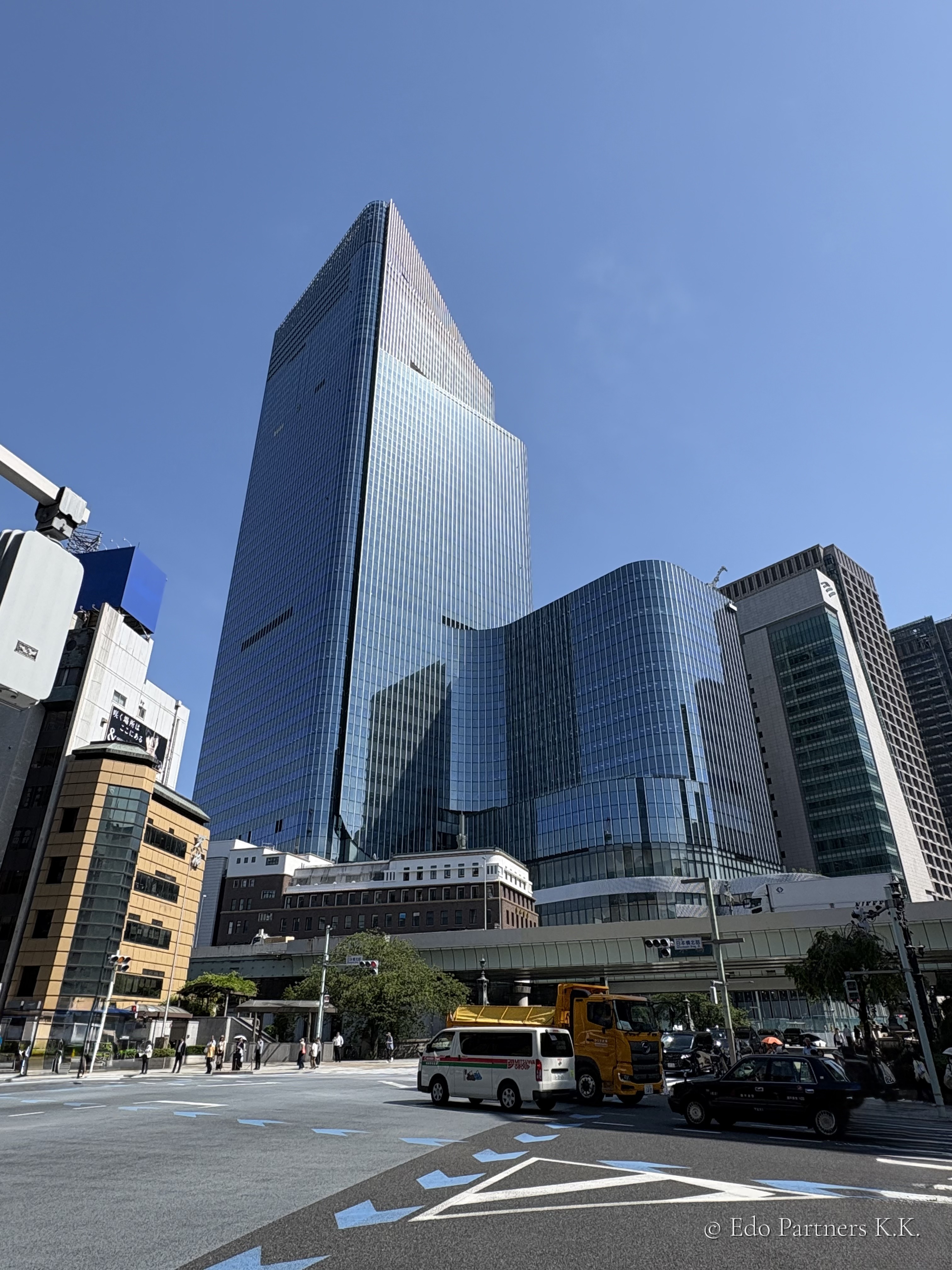
A few minutes on foot from Tokyo Station's Nihonbashi exit, at the boundary between Otemachi and Nihonbashi, sits Tokiwabashi Tower — a 212-meter, 38-story office and retail building completed in 2021, with a genuinely pleasant public plaza (TOKYO TORCH Park) attached, koi pond included. It's the first completed phase of TOKYO TORCH, a Mitsubishi Estate-led redevelopment that will eventually reshape this entire corner of central Tokyo. The project's centerpiece, Torch Tower, is under construction directly beside it and is officially targeted for completion at the end of June 2028 (pushed back two months from an original March target after unexpected obstructions were found underground) at roughly 385 meters — which would make it the tallest building in Japan, surpassing Mori JP Tower in Azabudai. What makes it directly relevant to this guide: Torch Tower's upper floors are planned to include an ultra-luxury hotel operated by Dorchester Collection and roughly 50 luxury rental residences above that, alongside large-scale office space lower down. It's a multi-year build, and none of it is available or bookable yet, but a client asking us "what's actually changing in this part of Tokyo over the next five years" should know this is the single biggest answer, sitting almost literally on top of Nihonbashi and Otemachi.
 © Edo Partners
Getting around
The subway map here is dense enough that it's worth naming the actual lines rather than just saying "well connected." Tokyo Metro's Marunouchi Line and Tozai Line both run through Otemachi and on toward Nihonbashi; the Ginza Line and Hanzomon Line stop at Mitsukoshimae, putting Nihonbashi Mitsukoshi and COREDO Muromachi one exit away; and Nihombashi Station itself (Tozai, Ginza, and Asakusa lines) sits a few minutes from Nihonbashi Bridge on foot. Otemachi functions as the connecting hub for most of these — one of the largest interchange stations in the city, with enough underground walking between lines that a "one transfer" trip can still mean a genuine five-minute walk. For daily commuting to Otemachi or Marunouchi itself, that density is a real asset; for a visitor unfamiliar with the layout, it's worth a practice run before rush hour.
Tokyo Station itself — upside and downside
Both halves of this guide sit within a few minutes of Tokyo Station, and that proximity cuts both ways. The upside is real: Shinkansen access to anywhere in the country, direct JR and subway lines covering the rest of Tokyo, and Haneda a straightforward ride away — for a client who travels constantly, this is about as good as commute logistics get anywhere in the city. The downside is that Tokyo Station itself is less a train station than a small city, with an enormous underground shopping concourse (Character Street, Ramen Street, and dozens of other retail corridors) that draws heavy tourist and day-tripper foot traffic well beyond commuting hours. Living immediately adjacent means accepting that your walk home regularly cuts through some of the densest pedestrian traffic in Tokyo — worth experiencing at rush hour before committing to a building that requires crossing through the station concourse daily.
Who this suits, and who it doesn't
A common surprise for clients who start this search asking for "Marunouchi": once we walk through the actual residential stock and the weekend-emptiness point, most redirect toward Nihonbashi on their own, without much persuading. The name recognition draws people in; the lived reality sends them one stop east.
Best for:
- Anyone whose work is genuinely in Marunouchi or Otemachi and wants the shortest possible commute, full stop
- Frequent domestic travelers who want Shinkansen and Haneda access baked into daily life
- Serious runners who want the Imperial Palace loop within walking distance
- Residents who value legacy retail and a sense of continuous history over cutting-edge architecture
Less ideal for:
- Anyone picturing "Marunouchi" as a neighborhood with real housing choice and street life — that's Nihonbashi, one stop over, not Marunouchi itself, where the choice is essentially one building
- Families prioritizing international schooling — the established options (Nishimachi, ASIJ, the British School's campuses) all sit in Minato or further out, so this isn't a walk-to-school neighborhood the way Azabudai or Hiroo can be; St. Luke's International Hospital in nearby Akashi-cho covers healthcare within the ward, but daily school runs are the real constraint. Families who want Chuo-ku's river-and-park character without that trade-off often end up in Hamacho or Kachidoki instead, both a short ride away
- Clients who want weekend energy on their own doorstep rather than a short train ride away
Schools and family life
As noted above, the established international schools — Nishimachi, ASIJ, the British School's campuses — all sit in Minato or further out, so this isn't a walk-to-school neighborhood. Families who want Chuo-ku's river-and-park character without that commute trade-off more often end up in Hamacho or Kachidoki, both a short ride from Nihonbashi and covered in more detail in our area comparisons on request.
Everyday shopping and daily life
Nihonbashi runs on legacy department stores and underground malls rather than a conventional neighborhood supermarket strip — Takashimaya, Mitsukoshi, and the Coredo Muromachi complex cover both retail and depachika-style grocery shopping. Marunouchi itself is even more office-oriented; most residents who work there do their actual daily shopping over in Nihonbashi or via delivery.
Rent level
As a guide only — confirmed with current listings before you commit to a budget — Nihonbashi's residential stock generally runs from around ¥450,000/month for a smaller apartment up to ¥1,500,000+/month for the largest, newest towers; Marunouchi's essentially one-building residential market prices at a similar or higher level. Figures are based on TokyoExpat's own market observation as of September 2026 and move with the specific building, size, and season; see our Luxury Rent Report for aggregate market data across central Tokyo.
The residences themselves
Housing in this pairing splits into three real categories, and it's worth knowing which one you're actually looking at. The first is serviced apartments — The Ascott Marunouchi Tokyo, in Otemachi, is the anchor here, with full kitchenettes, hotel-grade service, and a location genuinely walkable to Tokyo Station; we list it, along with other options in this part of central Tokyo, on our short-term housing page. The second is Nihonbashi's older condominium-for-rent stock — individually owned units in established buildings, concentrated in the residential pockets of Nihonbashi Muromachi, Nihonbashi Honcho, and toward Ningyocho and Hakozaki, generally offering more space per yen than a serviced apartment but with more variation in quality and building age. The third is newer purpose-built tower apartments, in Nihonbashi and neighboring Yaesu, which trade some of that older stock's character for modern specs and better building management. Which of these three actually fits depends on budget and how much you value newness versus space — get in touch and we'll walk you through what's currently available in each category rather than publish a price snapshot that goes stale in a month.
Buildings we currently list in this area include Ascott Marunouchi Tokyo and Oakwood Premier Tokyo — each with its own profile page covering location, contract type, and current availability.
TokyoExpat's Take
Marunouchi / Nihonbashi
Most searches that start with "Marunouchi" are really a proxy for "walking distance to Tokyo Station" — and once we say that plainly, the conversation moves quickly to Nihonbashi, which delivers the same commute with an actual neighborhood attached. We'd rather tell a client that upfront than let them tour a handful of buildings in a district that was never designed to be lived in. If your priority genuinely is minimizing commute time above everything else, Marunouchi's edges still make sense — just go in knowing what a weekend here actually looks like. Our first tour for this pairing usually starts by walking Marunouchi on a Sunday, deliberately, before heading through Mitsukoshimae into the lantern-lined approach to Fukutoku Shrine — a weekday visit alone will sell you on the wrong version of this area.